

Why Labels Should Be Part of Product Planning, Not an Afterthought
When developing a product, labels are often one of the last things to be considered. The product itself is designed, the packaging is chosen, the branding is agreed, and only then does someone ask, “What labels do we need?”
But labels do far more than fill a space on a product or package. They can influence how a product is presented, how it is handled, how it is identified, and how clearly important information is communicated.
For many businesses, the label is a small detail with a big role to play.
Labels Shape First Impressions
Before someone uses a product, they often see the label first. A clear, well-produced label can help a product look professional, organised and trustworthy. A poor-quality or badly fitted label can have the opposite effect, even if the product itself is excellent.
This matters across a wide range of sectors. Product labels, bottle labels, healthcare labels, warning labels, asset labels and barcode labels all need to be appropriate for their purpose. The right label can support branding, improve presentation and help customers or end users understand what they are looking at.
Labels Need to Work in the Real World
A label that looks fine on screen may not always perform well once it is applied. The surface, shape, material and environment all matter.
Will the label be applied to plastic, glass, metal or card? Will it need to withstand handling, moisture, temperature changes, cleaning products, chemicals, sunlight or outdoor conditions? Does it need to remain readable for weeks, months or years?
These practical questions are much easier to answer at the planning stage than after labels have already been printed.
By thinking about labels earlier, businesses can choose suitable materials, adhesives and finishes from the start, helping to avoid issues such as peeling, fading, smudging or poor adhesion.
Labels Support Identification and Traceability
In many industries, labels are not just about appearance. They are essential for identification, tracking and organisation.
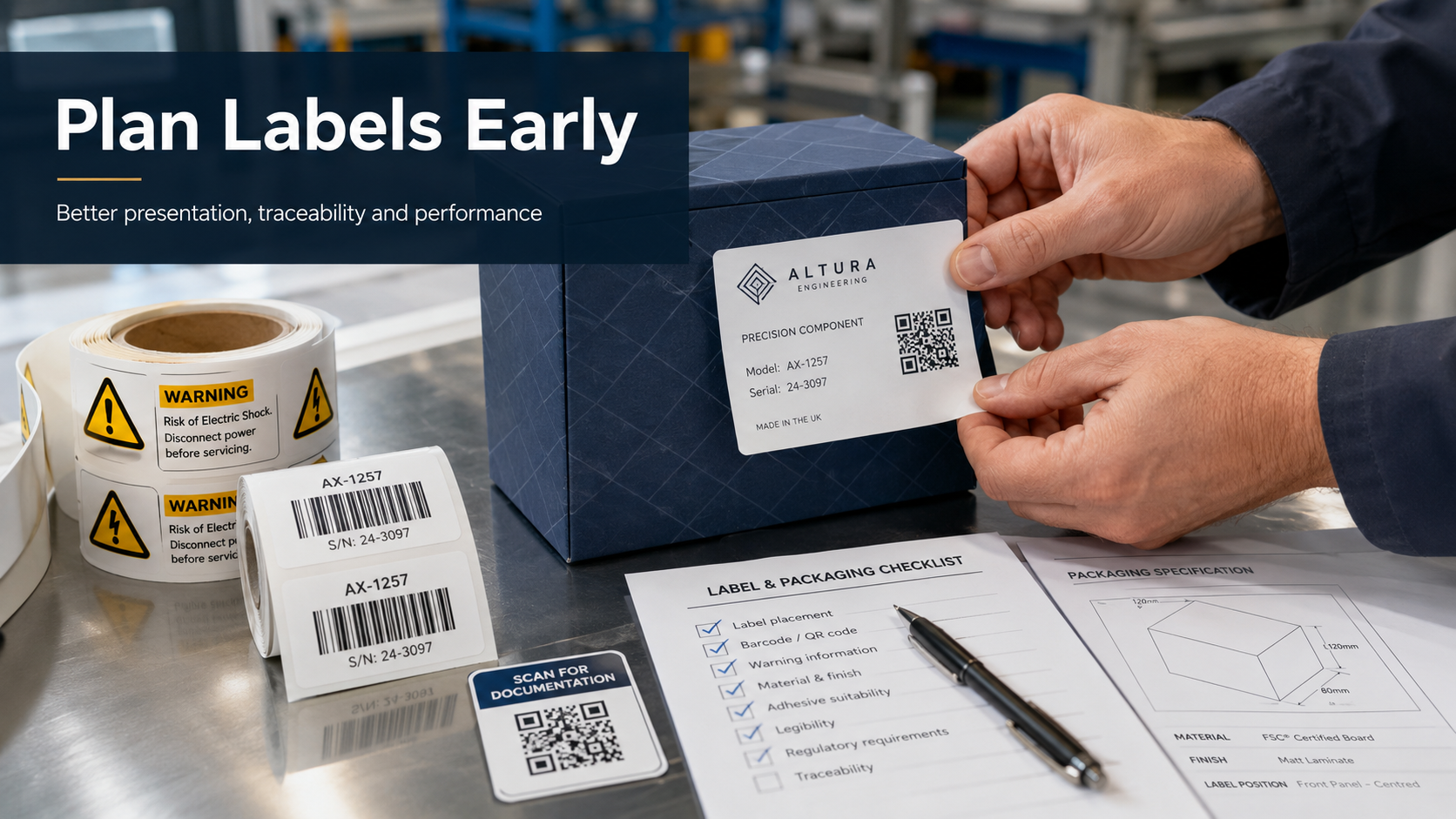
Barcode labels, QR code labels, asset labels and serial number labels can all help businesses manage stock, trace products, identify equipment, link to digital information and improve internal processes.
When labels are planned properly, they can become part of a wider operational system. When they are rushed at the end, there is a greater risk of missing important details, choosing the wrong format or creating a label that does not work well with the systems already in place.
Important Information Needs to Stay Clear
For some products and environments, label clarity is especially important. Warning labels, healthcare labels, pharmaceutical labels, electrical labels and industrial labels may need to communicate safety information, usage details, product data or handling instructions.
In these cases, the label needs to be easy to read, durable and suitable for the conditions it will face. Size, contrast, material, adhesive and finish can all make a difference.
A label that becomes damaged, unreadable or detached can create unnecessary problems, particularly where safety, compliance, traceability or product identification is involved.
Better Planning Can Save Time and Cost
Leaving labels until the last minute can lead to rushed decisions. Businesses may choose a standard option simply because time is short, only to discover later that it does not perform as needed.
Early label planning can help avoid:
unsuitable materials
poor adhesion
unclear print
labels that do not fit the product properly
delays close to launch
reprints due to missing information
labels that do not suit the environment
Involving a label printer early in the process means the practical details can be considered before production begins. This can make the whole process smoother and reduce the chance of costly changes later.
The Right Label Starts With the Right Questions
A good label is not just about what it looks like. It is about what it needs to do.
Before producing a label, it is worth asking:
What surface will it be applied to?
How long does it need to last?
Will it be used indoors or outdoors?
Does it need to resist moisture, heat, chemicals or handling?
Is it for branding, identification, safety, traceability or instructions?
Will it need a barcode, QR code, batch number or variable data?
Does it need to match existing packaging or brand guidelines?
These questions help ensure the finished label is suitable for the product, the environment and the end user.
Labels Deserve a Place in the Planning Process
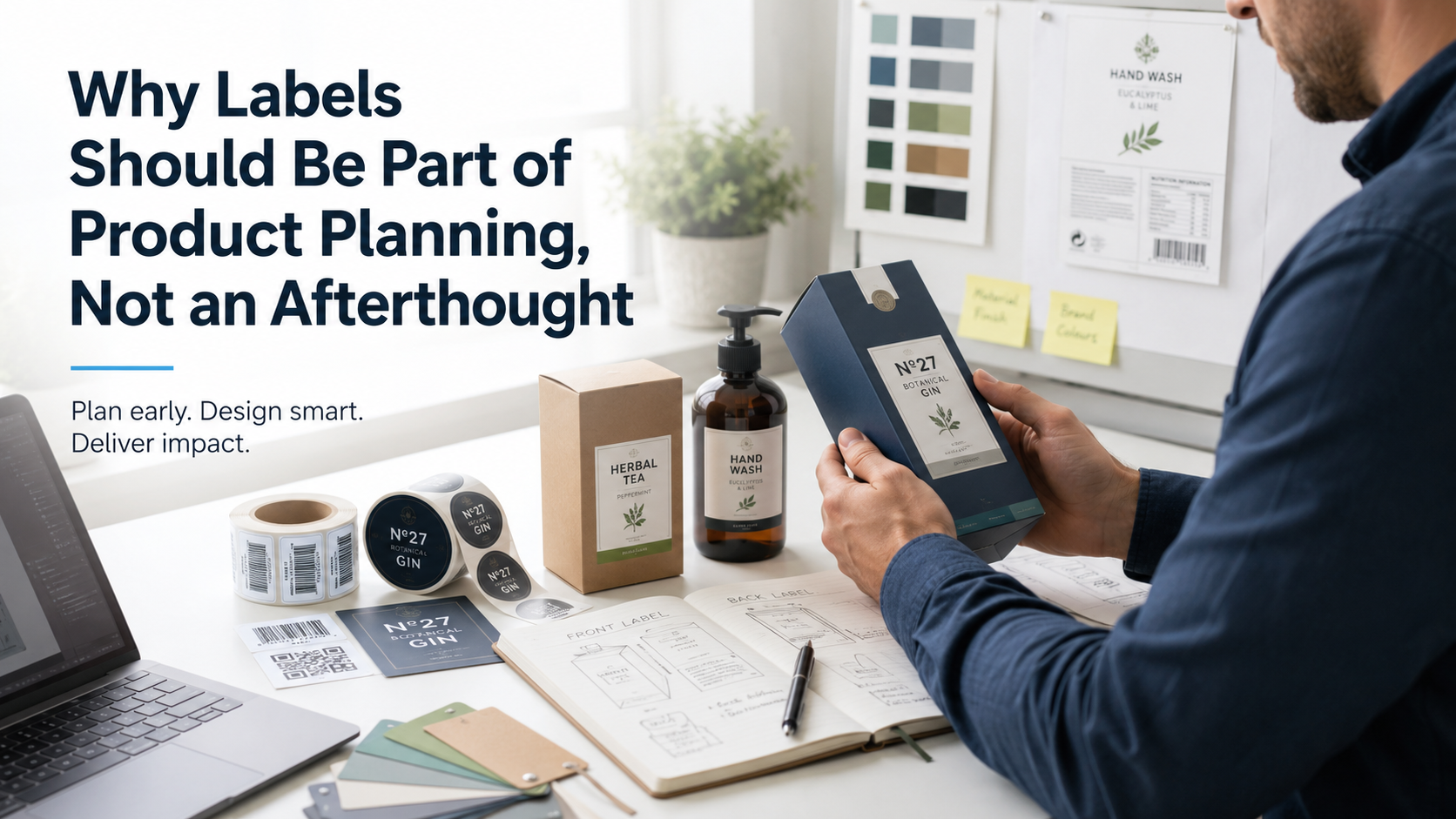
Labels may be small, but they are an important part of how products are presented, used and understood. Whether they are supporting branding, traceability, safety, healthcare information or industrial identification, they should not be treated as an afterthought.
By considering labels earlier in the product planning process, businesses can make better decisions about materials, adhesives, finishes, formats and functionality.
At Matform, we work with customers to produce bespoke labels for a wide range of applications, helping them choose practical, professional and effective label solutions that are made for the job they need to do.