

The Barcode Is Changing: Why QR Codes and 2D Labels Are Reshaping Product Identification
For decades, the primary role of a product label was relatively straightforward. It identified an item, displayed essential information and, in many cases, carried a traditional barcode that could be scanned at the till or within a warehouse.
That role is now changing.
QR codes and other two-dimensional barcodes are enabling labels to connect physical products with much larger amounts of digital information. A single scannable label can provide access to information covering a product’s manufacture, distribution, use, maintenance, compliance and eventual disposal.
This is not simply a change in packaging design. It represents a wider shift in how businesses manage product information and traceability.
From Product Identification to Product Intelligence
Traditional linear barcodes have supported retail, warehousing and supply-chain operations for more than 50 years. They remain extremely effective at identifying a product or stock item.
However, businesses are now expected to manage and communicate considerably more information than a traditional barcode was originally designed to contain.
Depending on the product and industry, organisations may need to provide access to:
Batch and serial numbers
Expiry or best-before dates
Manufacturing information
Operating instructions
Safety documentation
Maintenance and inspection records
Product authenticity information
Material and recycling guidance
Regulatory and compliance documents
Product support and warranty details
A QR code is a type of two-dimensional barcode that can hold more information than a traditional linear barcode. It can also direct the person scanning it to information stored online.This means the same label can support several different users. A warehouse operative may scan it for stock information, a retailer may use it to identify a particular batch, an engineer may access maintenance instructions and a customer may use it to view operating or recycling guidance.
Why Are Businesses Moving Towards 2D Barcodes?
QR codes are already familiar to most consumers, but their potential extends far beyond directing someone to a website.
Newer barcode systems can connect individual products with live digital records, allowing information to be updated without redesigning and reprinting all the information displayed on the product itself.
The retail industry is also preparing for wider use of next-generation 2D barcodes at the point of sale.
Tesco recently became the first UK supermarket to transition an entire own-label product range to QR codes powered by GS1. The codes can be used at checkout while also providing access to richer product information.
This does not mean traditional barcodes will disappear overnight. For some time, products may carry both linear and two-dimensional barcodes while retailers, manufacturers and supply chains update their systems.
However, the direction of travel is clear. Labels are increasingly being expected to connect products, systems and people rather than simply display fixed information.
Digital Product Passports Are Adding Further Momentum
The development of Digital Product Passports is another important part of this shift.
A Digital Product Passport is effectively a digital identity record for a product, component or material. It can provide standardised information about areas such as:
Product origin
Material composition
Environmental performance
Repairability
Safety
Reuse
Recycling
End-of-life handling
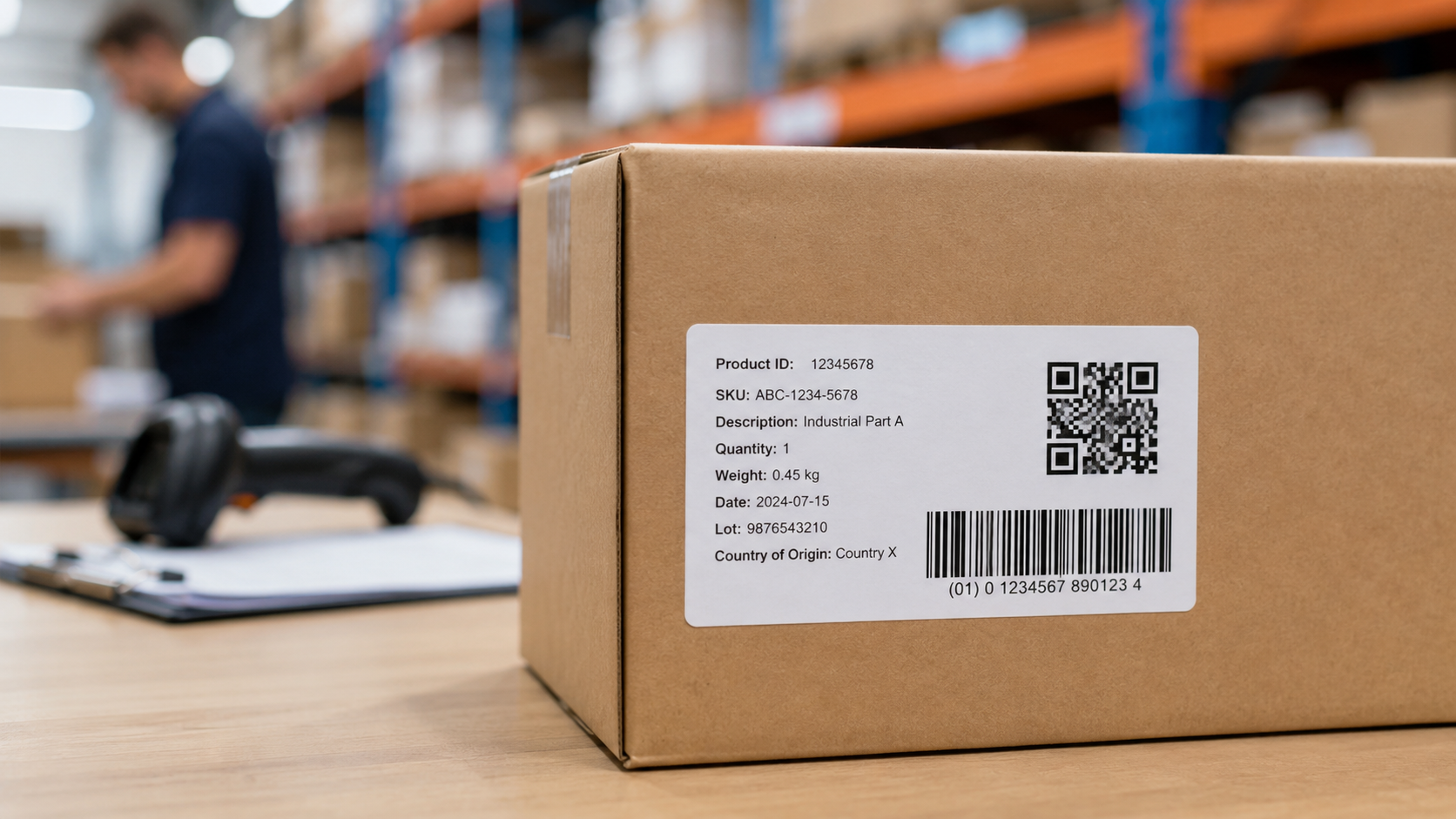
The European Union is introducing Digital Product Passports progressively across selected product groups.
Initial requirements are emerging in areas such as batteries, with other sectors including textiles, tyres, furniture, metals and construction products expected to follow through product-specific legislation.
This is particularly relevant to UK manufacturers and brands that sell products within European markets.
Even where a business is not currently affected by Digital Product Passport requirements, the development demonstrates how product information is becoming more detailed, accessible and standardised.
In many applications, a QR code or another suitable data carrier will provide the physical connection between the product and its digital information.
QR Code Labels Are Already Supporting Traceability
Businesses do not need to wait for future regulations before benefiting from data-connected labels.
QR code labels are already being used across industrial, commercial and consumer applications.
They can support:
Asset identification
Product traceability
Stock management
Equipment maintenance
Inspection records
Operating instructions
Warranty registration
Customer support
Safety information
Recycling guidance
Product authentication
Matform produces bespoke QR code labels that can be tailored to the product, application and working environment.
The label specification can be developed around factors such as the surface it will be attached to, the expected lifespan of the label and its exposure to water, chemicals, cleaning products, heat, cold, sunlight or abrasion.
Labels Will Become Part of Product Planning
As labels take on a more important role within product-data systems, businesses will need to consider them earlier in the product-development process.
Questions may include:
What information must the label carry?
Who will need to scan it?
What should happen when the code is scanned?
Will every product use the same code?
Does each item need an individual serial number?
Will the information need to change over time?
How small can the code be while remaining reliably scannable?
What surface will the label be applied to?
How long must the label remain readable?
Will the label be exposed to harsh operating conditions?
Could a coating, laminate or packaging finish interfere with scanning?
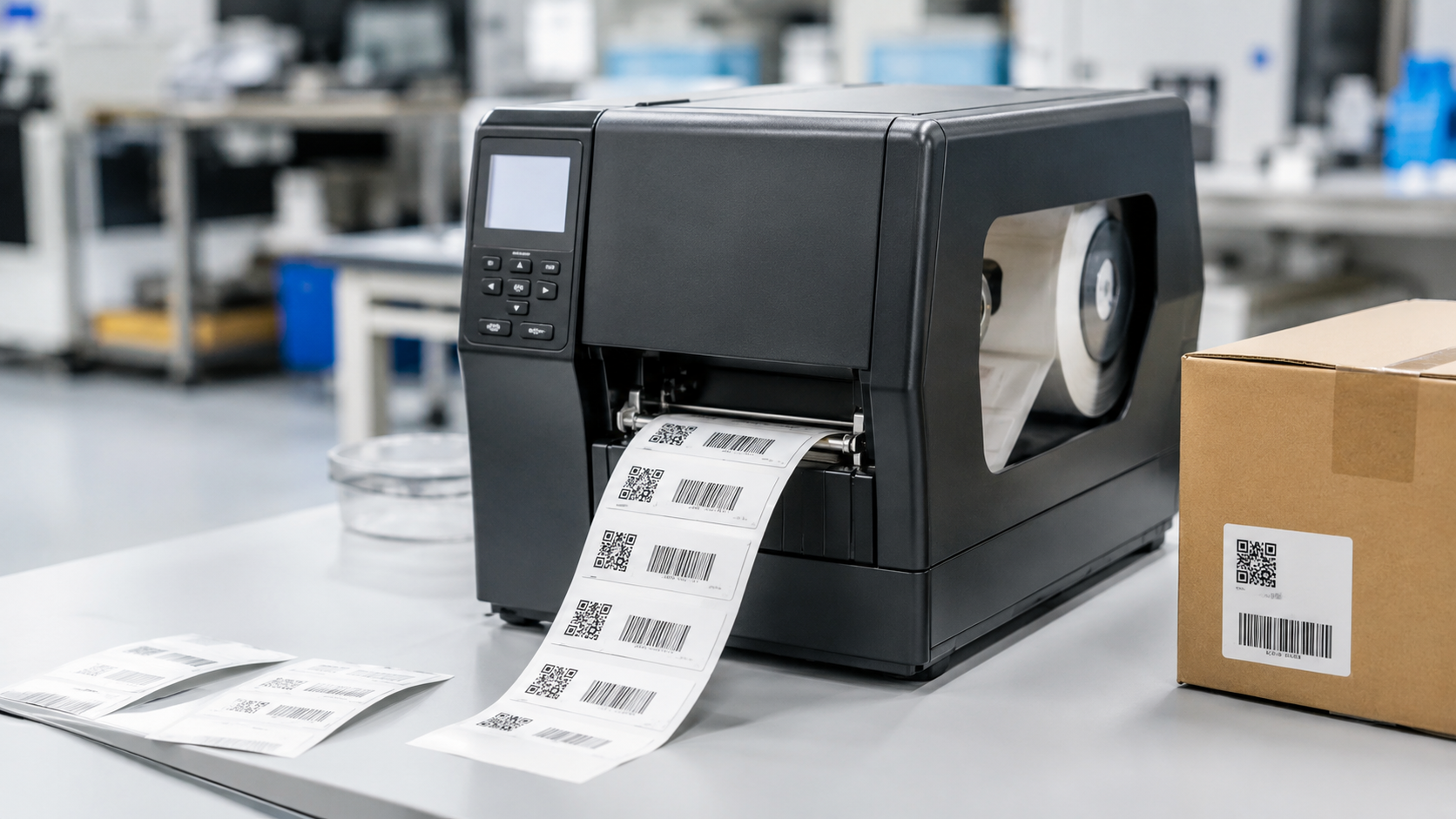
These are not purely graphic-design decisions.
They may involve production teams, procurement departments, compliance specialists, software providers, logistics teams and experienced label manufacturers.
Considering the physical label at the beginning of the project can help prevent scanning problems, unsuitable materials and costly artwork changes later.
Print Quality Is Becoming Data Quality
A QR code is only useful when it can be scanned reliably.
A code may appear acceptable to the human eye but still fail to scan because of insufficient contrast, poor print definition, an unsuitable size or interference around the code.
Factors that can affect scanning include:
Code resolution
Print contrast
Code dimensions
Surface shape
Label positioning
The space surrounding the code
Damage or contamination
Reflections from glossy materials
Curved or uneven application surfaces
The physical performance of the label is equally important.
A perfectly printed QR code may still become unusable if the label fades, lifts from the product, becomes scratched or deteriorates after exposure to moisture, chemicals, UV light or extreme temperatures.
The label material, adhesive, printing process and protective finish must therefore be matched to the real environment in which the label will be used.
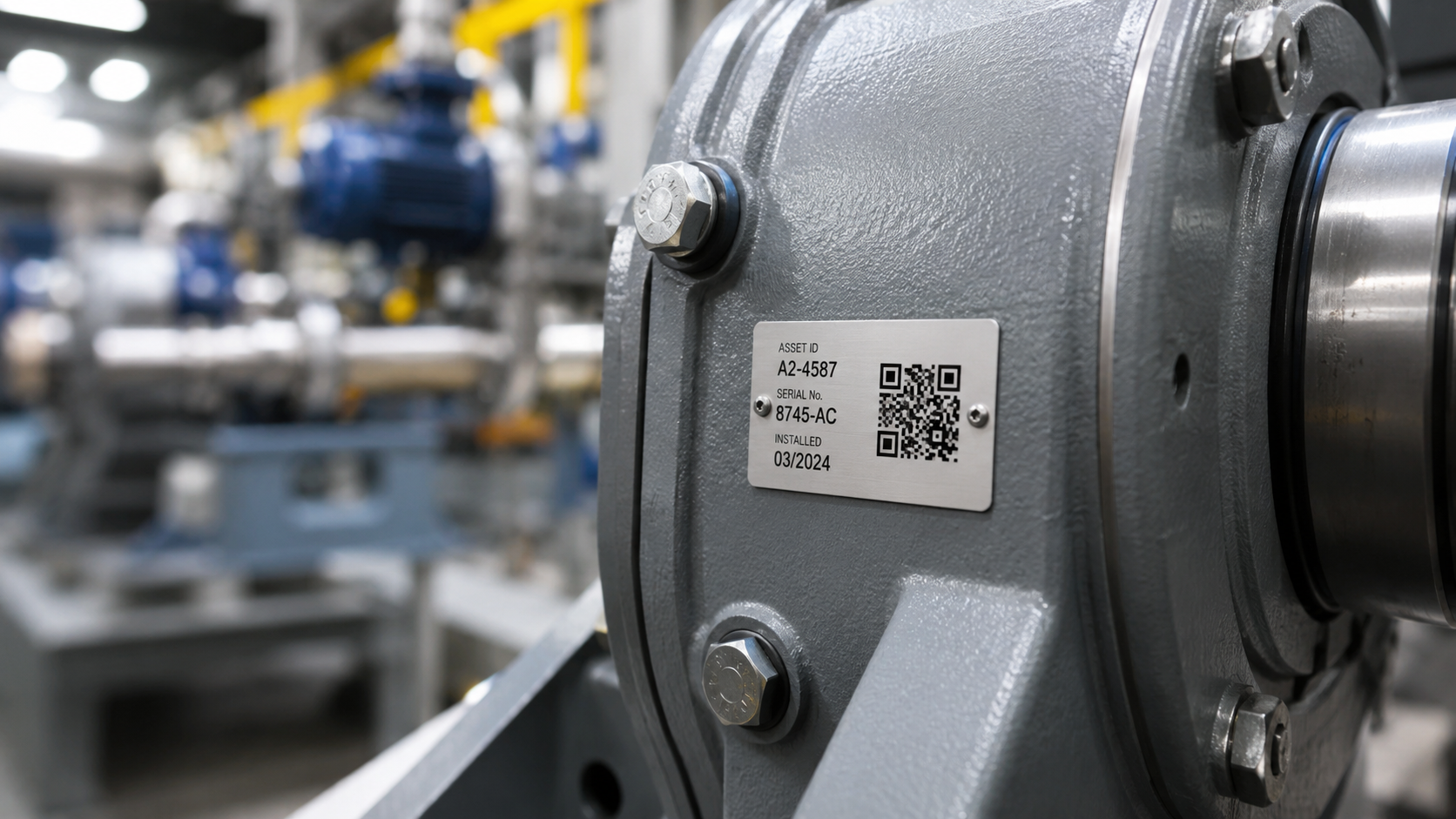
The Opportunity Extends Beyond Retail
The growth of connected labels is not limited to supermarket packaging.
Manufacturers and engineering businesses can use QR code labels to connect equipment with technical specifications, maintenance records and inspection histories.
Warehousing and logistics teams can connect products, pallets and containers with inventory or tracking systems.
Asset labels can provide employees with immediate access to ownership details, servicing information and operating instructions.
Safety labels can direct users to more detailed guidance than it would be practical to print directly onto a small product or component.
Healthcare, pharmaceutical and laboratory organisations can also use machine-readable labels to support identification, traceability and batch control, subject to the regulations and standards applying to their sector.
The technology and specification will vary between applications, but the principle remains the same: the label provides a reliable link between a physical item and its digital record.
What Should Businesses Do Now?
Most organisations do not need to replace every existing label immediately.
However, it is sensible to begin reviewing how product and asset information is currently created, printed and managed.
Businesses should consider:
Identifying products or assets that would benefit from improved traceability.
Reviewing customer and supply-chain information requirements.
Checking whether future regulatory changes could affect their products.
Deciding whether codes will identify a product type, batch or individual item.
Confirming what information users should see after scanning the code.
Testing the code’s size, placement and scanning performance.
Selecting label materials suitable for the intended environment.
Involving an experienced label manufacturer before artwork is finalised.
Early planning can help prevent wasted packaging, failed scans and unnecessary changes to product designs.
Preparing Labels for a More Connected Future
Matform produces bespoke QR code labels, barcode labels, serial-number labels, asset labels and specialist industrial labels for a wide range of applications.
Every label is considered in relation to its intended surface, working environment, required lifespan and scanning requirements.
As product information and traceability requirements continue to evolve, working with an experienced label manufacturer from the outset can help ensure the physical label remains a reliable part of the complete system.
Speak to the Matform team about bespoke QR code labels, barcode labels, asset labels and product-identification requirements.